

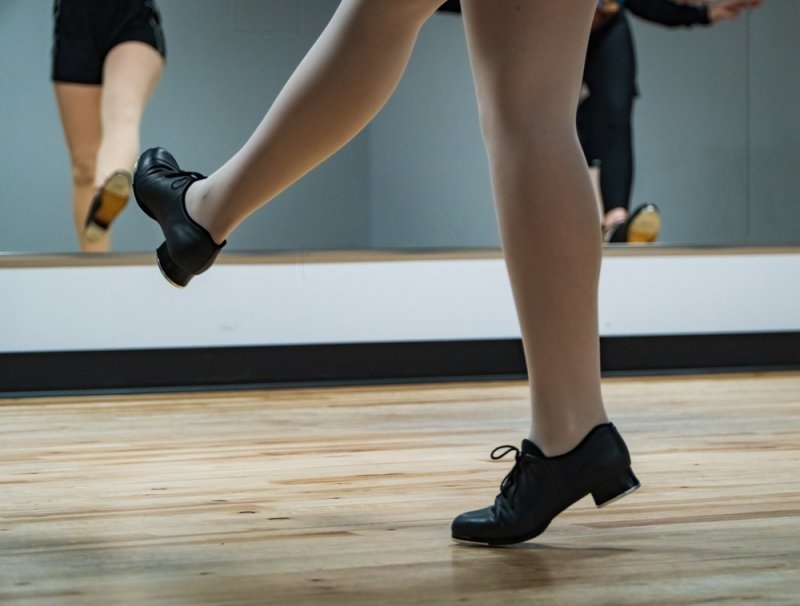
Tap dance is motion, music, and rhythm, like I said earlier. To learn tap dance for beginners, you don't need to spend years dancing or have incredible coordination.
However, if you learn the tap dance basics, always be attentive to the beat and practice often; I promise you'll have a good foundation for dancing casually.
Tap dance is a type of dance using metal "taps" connected to the heel and toe of a performer's shoes, which produce a musical sound when striking the floor. Tap dancers essentially "play" their feet like a musical instrument, combining various styles of steps to produce rhythms to match or complement the music.
Begin with rhythm, not quickness, when learning tap dance. A stamp. You do not have to learn tap dance with music; you can learn just the core sounds and then increase the tempo. When you have the basics of tap dance down, all of the trickier tap combinations are easy to learn, and you will get cleaner tap sounds and movements.
As soon as you've mastered "What are the easiest tap dance steps to learn first?", you'll find it much easier to learn to manipulate your feet and weight and get all sorts of different sounds from them. Don't rush through any step – take your time and be sure everyone is done perfectly. When you get comfortable, you can combine steps together for coordination and timing. Here's how beginners learn tap dance at home:
Tap the ball of the foot down to the ground lightly to the beat of the music, without bearing your whole weight down through that foot. Focus on a crisp tap, stay light on your toes, and make the tap small. Practice one leg at a time.
Touch the ball of your foot down to the floor, lift the heel off the floor, then drop it to make a noise. Heel drops are an easy way to learn to move the heel. Practice them on both sides, gently, with your knees soft.
Almost the simplest tap step, and the very first tap step students learn, is the shuffle. Brush the ball of your foot forward, then backward, for two small sounds. Practice slowly enough so that you can make out each sound, then speed up until you can do it fast.
A stamp is when you stamp your foot flat on the floor and transfer your weight onto it. A stamp isn't a tap on your toes, and a stamp is somewhat louder than a tap. When you stamp, you also shift your balance. Practice stamping with a loose upper body, not pounding your feet into the floor.
They are helpful for beginners to learn the rhythm and balance, as they try a few faster moves. Step to one side and bring your other foot next to it. Step to the other side and then repeat.
Good tap dancing steps in your routine are that you are able to move freely, have good timing and beat, and have good sounds. Try to avoid excessive knee bends, keep your shoulders down, and sit straight up. Avoid extreme high leg kicks; many of your tap sounds come from small steps right at the floor.
Chant loudly as you practise to stay on pitch: After first getting one sound on each count, move onto two sounds on a beat as your control improves. Basic tap dance moves will develop control as well as enable you to master more advanced combinations without putting too much strain on your ankles.
You can learn tap dance at home by creating a small tap dance practice space. Find a few yards of good flooring, take a couple of minutes, and practice a sequence. Use a flat, hard surface that isn't too hard, provides some resistance, and isn't slippery. No delicate floors that your taps can damage and no furniture.
If you are a beginner learning to tap dance, try a basic tap dance tutorial for one step at a time. Focus on one move at a time before you try to learn a whole tap dance routine. Use a small mirror so you can see yourself tap dancing at home or film yourself for a minute.
Once you have all of the steps down and can do each of them easily, start putting together a simple tap dance routine. Begin with a four-beat pattern and run it over several times before adding the next step in. This will make putting the movements together less daunting.
Here's a little combo you can practise: step right, step left, shuffle right, and drop right heel. Reverse the motions when you are ready. Go slow, then pick up your speed to music at a tempo that is comfortable.
Beginner tap dance classes have a syllabus, tips, and progression from simple steps to longer routines. Your teacher can identify any problems early, such as weight placement and timing. It's easier to see what to do in a live tap dance class. Online tap dance classes give you more flexibility to practice tap dance at home whenever you want.
Adult tap dancing: If you've never been to a dance class before, this is also a perfect hobby for you. You can always start at a basic level and take your time. No matter if you're doing it as part of your fitness routine, to try something new, or as a hobby, the key is to persist!
You don't need a fancy rig to begin with, but you will need a good set of gear to start. The right shoes and a safe practice space will help you focus on your steps rather than your shoes slipping or hurting your feet.
What equipment do beginners need for tap dancing?
Your tap shoes should fit tight, not pinch your toes or shift at your heel. Choose a dance floor or tap board that helps protect your existing floors and is hard. Wear comfortable clothing, keep water nearby, and build up to 10-15 minutes of tap at a time.
Beginner tap dance tips allow you to make it so much easier to play tap dancing, and all you have to do is concentrate on tap dancing basics such as timing, simple steps, and progression instead of assuming you have to learn everything simultaneously.
You can discover simple tap dance beginner steps, how long it takes to learn basic tap dance, go over tap dance moves for beginners, and use a beginner tap dance tutorial as your training resource. Whether you take tap dancing lessons or practice tap dance at home, the more you repeat this dance style, the more confident you will get.
Yes. It will get you going, and it will give your brain something to do, working in time with the music, holding your balance. Since you're doing this all the time, it will make you aware of the sort of things you are doing.
A full-fledged tap dancing session for a long, vigorous time can be a light-to-moderate workout. It exercises your legs, increases your balance awareness, and gets your blood flowing. Of course, you can always start the style at whatever level works for you.
Novices may want to start practising their steps in silence so that they can get used to how each one sounds and also ensure they are all producing good sound. Once they can perform the steps well, they can then start to add some slower music to get used to the timing of the steps and beat.
Wear comfortable clothing that is loose enough to allow movement. Wear stretch pants or leggings, or dance clothes with tap shoes that fit. If you have metatarsal pads, be sure to obey your instructor before your first lesson.
In the beginning, two to four times a week is a general guideline. Even a short session of concentrated practice a couple of times a week versus a single session a week is a good thing. Take breaks and don't be afraid to play longer as you get a feel for it.
This content was created by AI